📖 The Sugar Moon Parade of Sweet Kingdom
Chapter 1: The Stuck Caramel Crown
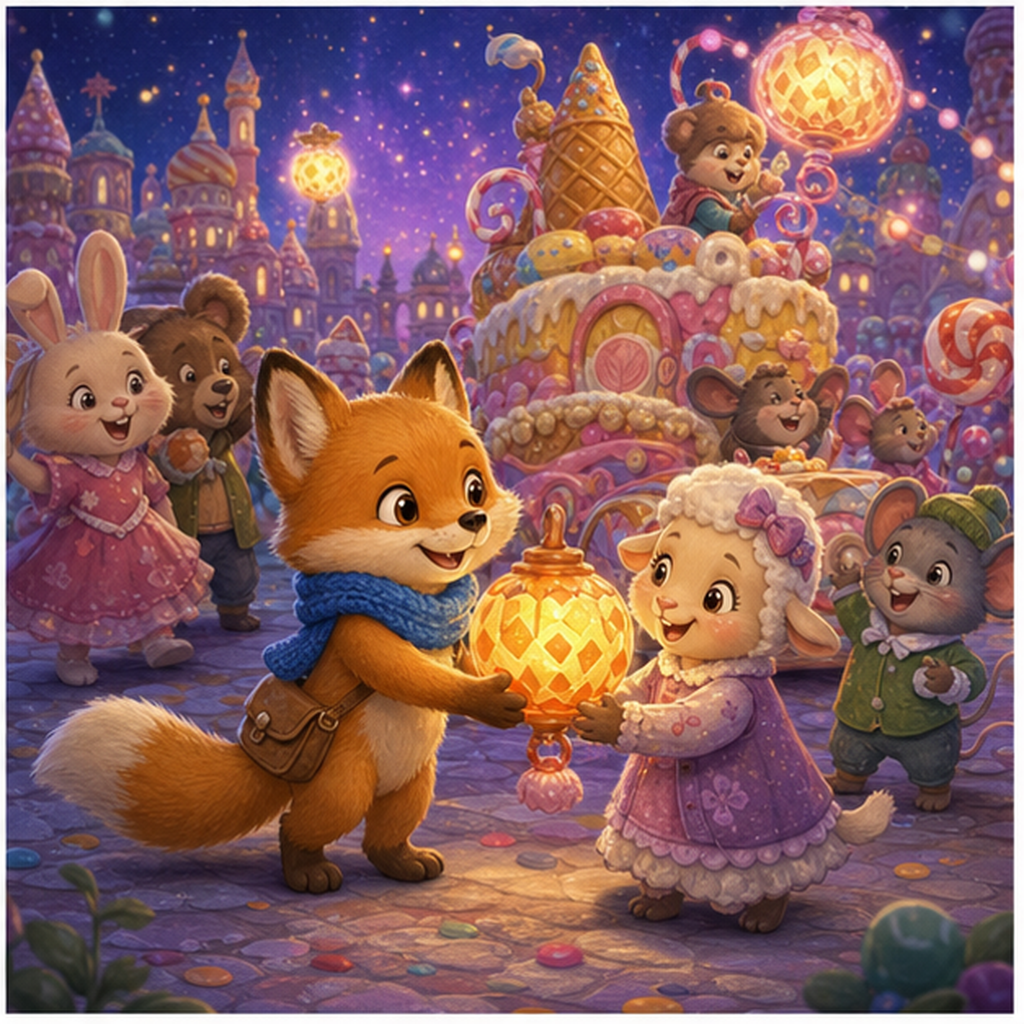
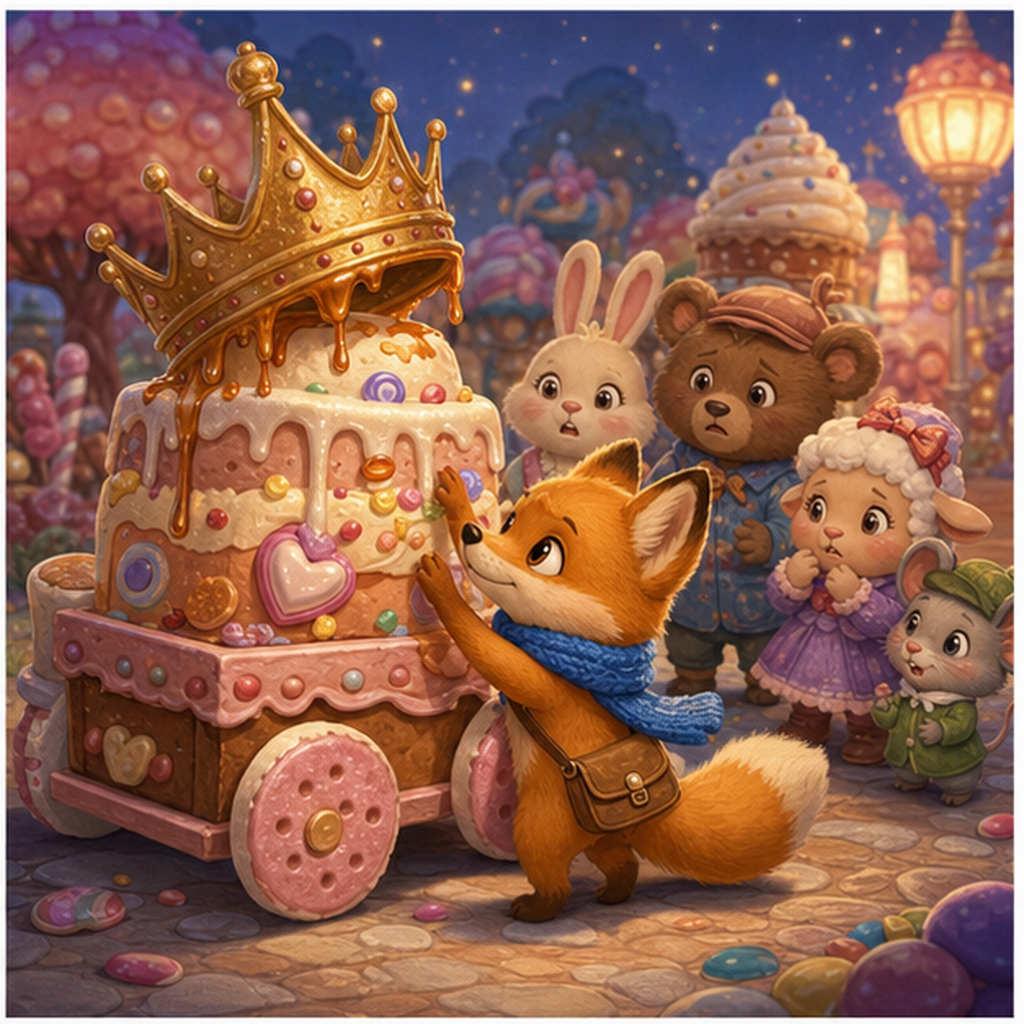
The Sugar Moon Parade was the sweetest night in Sweet Kingdom. Candy lanterns bobbed above peppermint roads, cupcake carts waited in shining rows, and the sugar moon rose round and pale over the frosting towers. Foxy arrived with one special treat in his satchel: a bright candy lantern shaped like a star. He had saved it all week and planned to carry it at the front of the parade. Then he heard a sniffle behind the cake carts. A caramel crown had slid from the royal float and stuck fast around the wheel of the smallest cart. The little bakers who owned the cart had no spare wheel, no spare crown, and no time before the parade began. Foxy held his candy lantern tighter. If he helped, his perfect place at the front might disappear. If he did not help, the smallest cart would miss the parade entirely. The sugar moon climbed higher, and Foxy felt the difference between keeping joy and guarding it too tightly. Foxy also noticed the small details children often notice first: the way dust glittered when the light moved, the way a worried friend tried to be brave by standing a little straighter, and the way a good idea sometimes arrived only after everyone stopped talking at once. He named those details softly, because naming them made the moment feel less tangled. The friend beside him listened, then added one detail Foxy had missed. That made Foxy smile. A story becomes easier to enter when more than one heart is allowed to describe it. They made a careful plan with room for mistakes. Foxy would try the part that needed steady paws, his friend would watch for changes, and both of them would pause whenever the place seemed to ask for quiet. The first attempt worked only halfway. The second attempt made a funny mess. On the third attempt, they understood what the first two had been teaching them. Foxy felt the old wish to hurry, but now it sounded smaller. The work in front of him mattered more than being finished. Afterward, Foxy did not remember the adventure as a single grand triumph. He remembered the small choices: listening before acting, sharing before keeping, breathing before rushing, and thanking the friend who saw the missing piece. Those choices stayed with him like smooth pebbles in his satchel. Whenever he met another problem, he could take one out and remember how this day had changed because he chose care over speed. Before leaving, Foxy looked once more at the place where the trouble had begun. It no longer seemed like a warning sign. It seemed like a little doorway into understanding. He promised himself that he would tell the story carefully, including the unsure parts, because children who hear only brave endings may forget that brave beginnings often feel wobbly. The friend beside him agreed. They walked home slowly, letting the lesson settle like warm light in a window.
Chapter 2: Wheels for Everyone
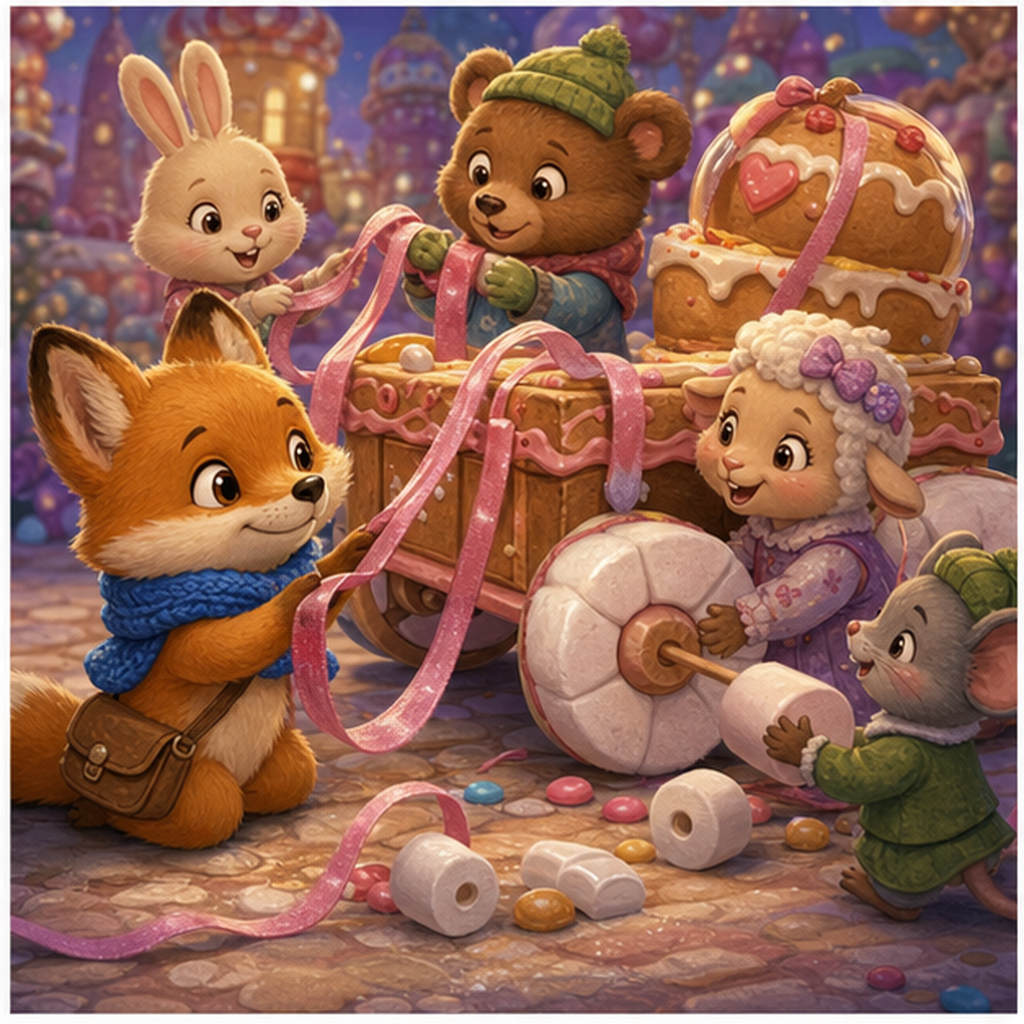
Foxy opened his satchel. Inside were a few crumbs, a ribbon from breakfast, and the candy lantern he loved. The lantern's handle was made from twisted sugar strong enough to hold a cart peg. Foxy hesitated only a moment before offering it. The little bakers gasped, but the repair still needed a wheel. A marshmallow maker rolled over with two soft wheels, a peppermint drummer brought sticky mint glue, and a gumdrop child shared sparkling buttons for the axle. Once Foxy gave the first piece, other children found pieces they could give too. Nobody had enough alone. Together they had more than enough. They freed the caramel crown, fixed the cart, and polished the sticky wheel until it shone. Foxy's lantern no longer looked like a perfect star; part of its handle had become a cart peg. Yet when the bakers lit it, the whole cart glowed warmly from underneath. Foxy discovered that sharing did not make his treasure vanish. It gave the treasure somewhere new to shine. Foxy also noticed the small details children often notice first: the way dust glittered when the light moved, the way a worried friend tried to be brave by standing a little straighter, and the way a good idea sometimes arrived only after everyone stopped talking at once. He named those details softly, because naming them made the moment feel less tangled. The friend beside him listened, then added one detail Foxy had missed. That made Foxy smile. A story becomes easier to enter when more than one heart is allowed to describe it. They made a careful plan with room for mistakes. Foxy would try the part that needed steady paws, his friend would watch for changes, and both of them would pause whenever the place seemed to ask for quiet. The first attempt worked only halfway. The second attempt made a funny mess. On the third attempt, they understood what the first two had been teaching them. Foxy felt the old wish to hurry, but now it sounded smaller. The work in front of him mattered more than being finished. Afterward, Foxy did not remember the adventure as a single grand triumph. He remembered the small choices: listening before acting, sharing before keeping, breathing before rushing, and thanking the friend who saw the missing piece. Those choices stayed with him like smooth pebbles in his satchel. Whenever he met another problem, he could take one out and remember how this day had changed because he chose care over speed. Before leaving, Foxy looked once more at the place where the trouble had begun. It no longer seemed like a warning sign. It seemed like a little doorway into understanding. He promised himself that he would tell the story carefully, including the unsure parts, because children who hear only brave endings may forget that brave beginnings often feel wobbly. The friend beside him agreed. They walked home slowly, letting the lesson settle like warm light in a window.
Chapter 3: The Parade That Grew
The parade began with the smallest cake cart at the front. Foxy walked beside it, carrying the caramel crown carefully on a cushion of spun sugar. Children cheered when they saw the repaired wheel turning smoothly, and soon everyone wanted to add something: a licorice streamer, a sugar bell, a tiny flag, a song. The parade grew longer and brighter with every shared gift. Foxy did not stand alone at the front as he had imagined. He walked in the middle, surrounded by friends, which turned out to feel much better. When they reached the moonlit square, the little bakers placed the caramel crown on the cart and invited Foxy to light the final lantern. Its star shape was uneven now, but the glow was wider than before. Sweet Kingdom sparkled from road to rooftop. Foxy saved one crumb of candy for later and gave the rest away gladly. He had learned that joy kept in one paw can be pretty, but joy shared between many paws becomes a parade. Foxy also noticed the small details children often notice first: the way dust glittered when the light moved, the way a worried friend tried to be brave by standing a little straighter, and the way a good idea sometimes arrived only after everyone stopped talking at once. He named those details softly, because naming them made the moment feel less tangled. The friend beside him listened, then added one detail Foxy had missed. That made Foxy smile. A story becomes easier to enter when more than one heart is allowed to describe it. They made a careful plan with room for mistakes. Foxy would try the part that needed steady paws, his friend would watch for changes, and both of them would pause whenever the place seemed to ask for quiet. The first attempt worked only halfway. The second attempt made a funny mess. On the third attempt, they understood what the first two had been teaching them. Foxy felt the old wish to hurry, but now it sounded smaller. The work in front of him mattered more than being finished. Afterward, Foxy did not remember the adventure as a single grand triumph. He remembered the small choices: listening before acting, sharing before keeping, breathing before rushing, and thanking the friend who saw the missing piece. Those choices stayed with him like smooth pebbles in his satchel. Whenever he met another problem, he could take one out and remember how this day had changed because he chose care over speed. Before leaving, Foxy looked once more at the place where the trouble had begun. It no longer seemed like a warning sign. It seemed like a little doorway into understanding. He promised himself that he would tell the story carefully, including the unsure parts, because children who hear only brave endings may forget that brave beginnings often feel wobbly. The friend beside him agreed. They walked home slowly, letting the lesson settle like warm light in a window.