📖 The Kite Clock of Cloud City
Chapter 1: The Missing Hour Ribbons
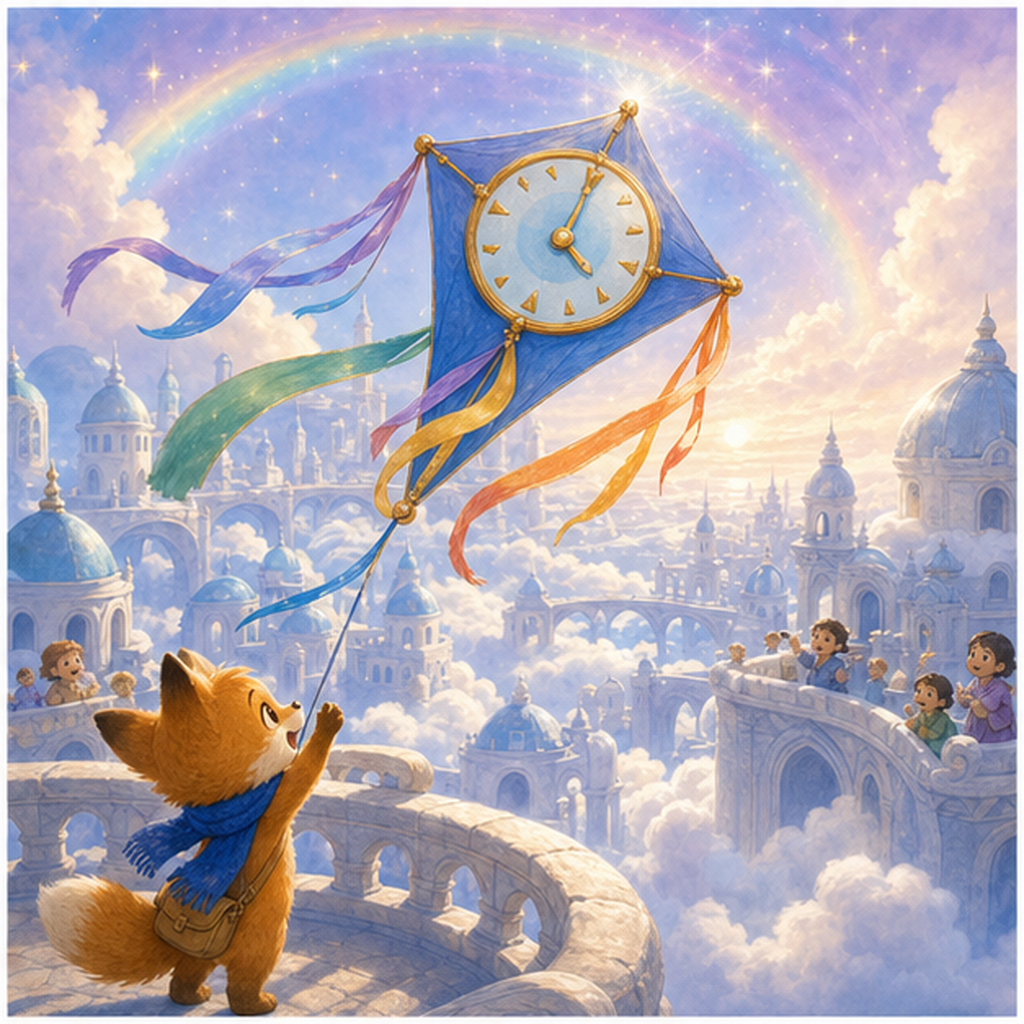
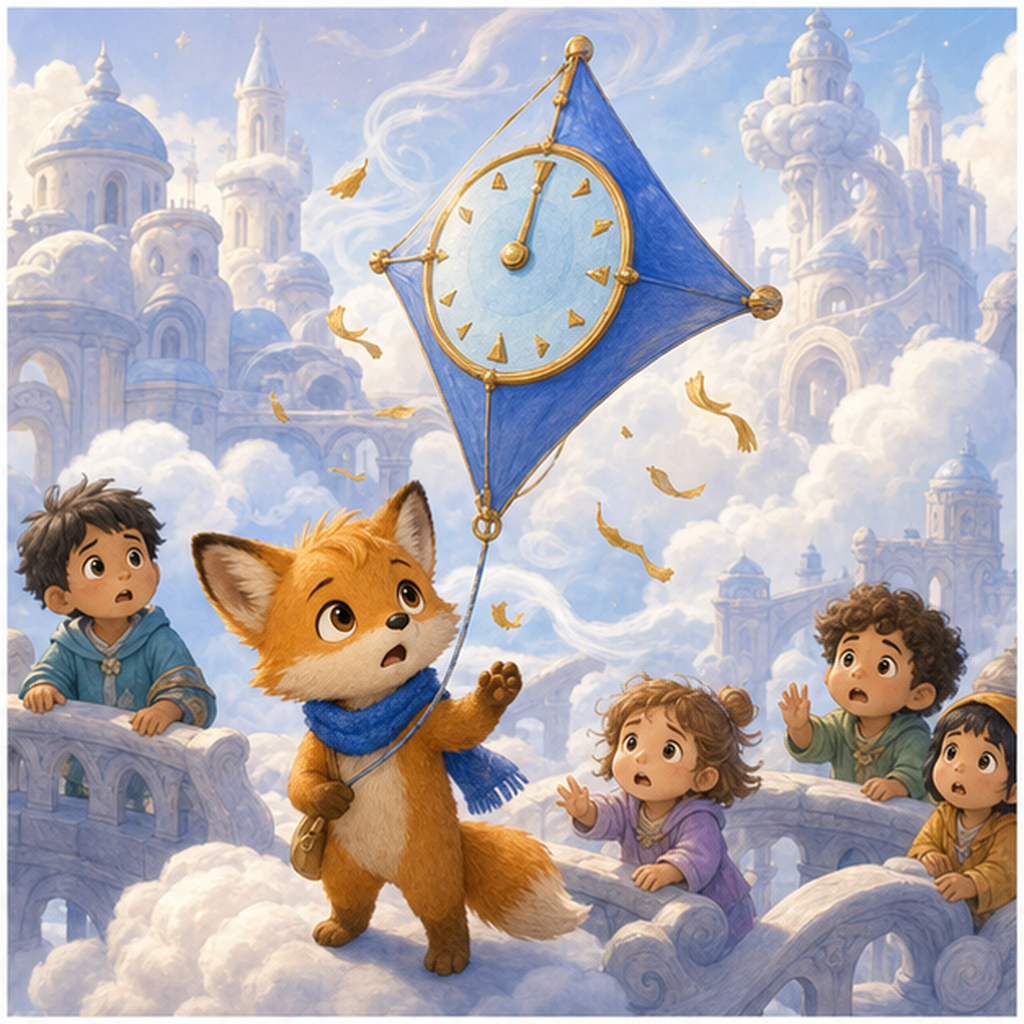
Cloud City kept time with a kite clock that flew above the highest balcony. It had twelve ribbon tails, each a different color, and when the wind turned them together the bridges chimed gently for breakfast, lessons, stories, and sleep. On the morning Foxy visited, the kite clock spun in a wild circle and lost six ribbons at once. Blue drifted toward the bakery clouds, yellow tangled around a bell tower, and silver vanished into mist. Children on the cloud bridges began arguing about what time it was. Foxy could have chased the nearest ribbon by himself, but Cloud City was too wide for one pair of paws. A little cloud sprite named Luma floated beside him, worried that everyone would blame the wind. Foxy shook his head. The wind was not being naughty; it was trying to say something too quickly. He asked each child where they had last seen a ribbon. Soon the worried voices became clues. Friendship turned the problem from a race into a map, and the kite clock dipped lower, as if listening. Foxy also noticed the small details children often notice first: the way dust glittered when the light moved, the way a worried friend tried to be brave by standing a little straighter, and the way a good idea sometimes arrived only after everyone stopped talking at once. He named those details softly, because naming them made the moment feel less tangled. The friend beside him listened, then added one detail Foxy had missed. That made Foxy smile. A story becomes easier to enter when more than one heart is allowed to describe it. They made a careful plan with room for mistakes. Foxy would try the part that needed steady paws, his friend would watch for changes, and both of them would pause whenever the place seemed to ask for quiet. The first attempt worked only halfway. The second attempt made a funny mess. On the third attempt, they understood what the first two had been teaching them. Foxy felt the old wish to hurry, but now it sounded smaller. The work in front of him mattered more than being finished. Afterward, Foxy did not remember the adventure as a single grand triumph. He remembered the small choices: listening before acting, sharing before keeping, breathing before rushing, and thanking the friend who saw the missing piece. Those choices stayed with him like smooth pebbles in his satchel. Whenever he met another problem, he could take one out and remember how this day had changed because he chose care over speed. Before leaving, Foxy looked once more at the place where the trouble had begun. It no longer seemed like a warning sign. It seemed like a little doorway into understanding. He promised himself that he would tell the story carefully, including the unsure parts, because children who hear only brave endings may forget that brave beginnings often feel wobbly. The friend beside him agreed. They walked home slowly, letting the lesson settle like warm light in a window.
Chapter 2: Listening to the Wind
Foxy and Luma followed the clues across three swaying bridges. The blue ribbon smelled faintly of warm rolls, so the baker children helped untie it from a basket handle. The yellow ribbon chimed whenever someone laughed, and they found it wrapped around the bell tower where two shy friends were giggling at their own echo. The silver ribbon was hardest. It had slipped into a quiet cloud pocket where sound became soft and thoughts felt far away. Foxy wanted to grab it before the mist moved, but Luma asked him to wait. In Cloud City, she explained, ribbons returned best when the wind felt heard. Foxy stood still and named what he noticed: the wind was cooler from the north, tired from carrying rain, and full of tiny bell notes. One by one, the children repeated what they heard. The silver ribbon floated out and curled around Foxy's paw. No single friend had solved the clock. Each had noticed one part, and together their noticing made a whole answer. Foxy also noticed the small details children often notice first: the way dust glittered when the light moved, the way a worried friend tried to be brave by standing a little straighter, and the way a good idea sometimes arrived only after everyone stopped talking at once. He named those details softly, because naming them made the moment feel less tangled. The friend beside him listened, then added one detail Foxy had missed. That made Foxy smile. A story becomes easier to enter when more than one heart is allowed to describe it. They made a careful plan with room for mistakes. Foxy would try the part that needed steady paws, his friend would watch for changes, and both of them would pause whenever the place seemed to ask for quiet. The first attempt worked only halfway. The second attempt made a funny mess. On the third attempt, they understood what the first two had been teaching them. Foxy felt the old wish to hurry, but now it sounded smaller. The work in front of him mattered more than being finished. Afterward, Foxy did not remember the adventure as a single grand triumph. He remembered the small choices: listening before acting, sharing before keeping, breathing before rushing, and thanking the friend who saw the missing piece. Those choices stayed with him like smooth pebbles in his satchel. Whenever he met another problem, he could take one out and remember how this day had changed because he chose care over speed. Before leaving, Foxy looked once more at the place where the trouble had begun. It no longer seemed like a warning sign. It seemed like a little doorway into understanding. He promised himself that he would tell the story carefully, including the unsure parts, because children who hear only brave endings may forget that brave beginnings often feel wobbly. The friend beside him agreed. They walked home slowly, letting the lesson settle like warm light in a window.
Chapter 3: A Time for Every Friend
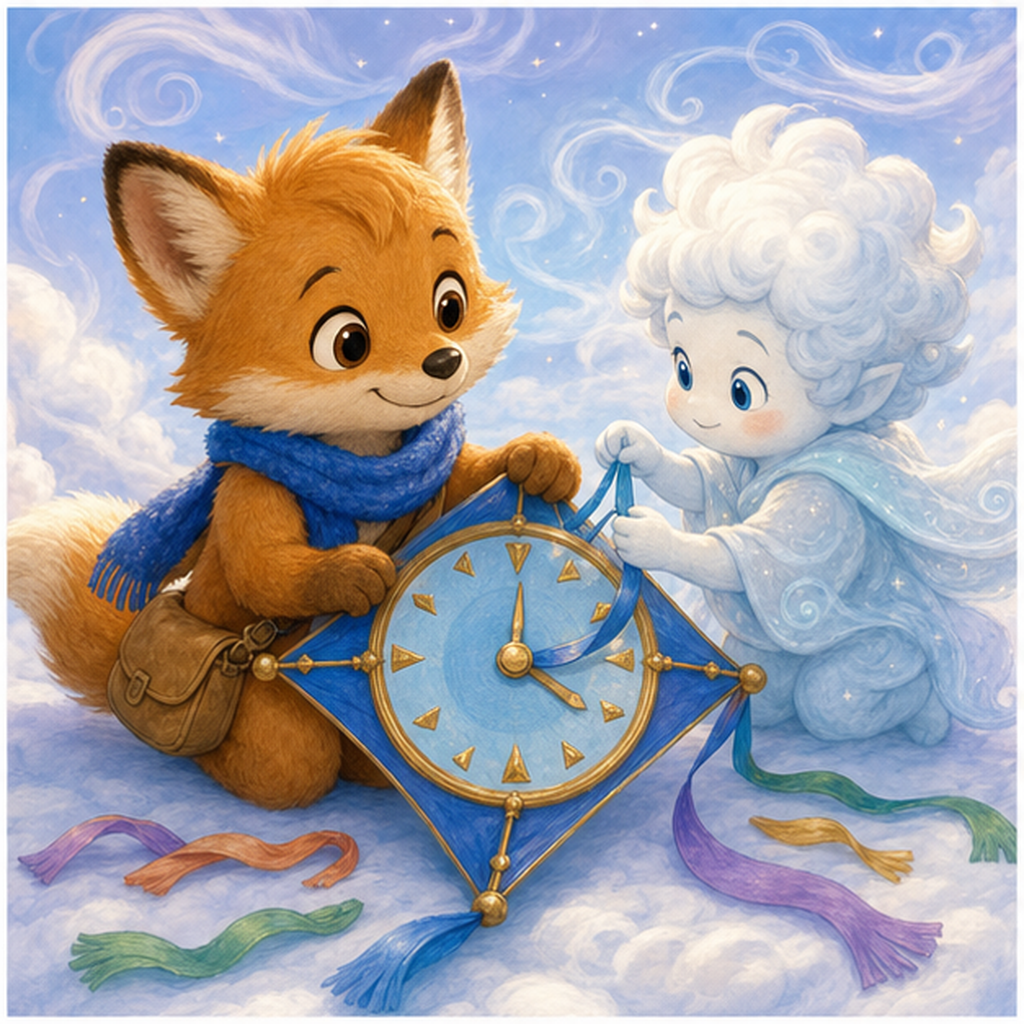
By evening the kite clock rose above Cloud City again. Foxy, Luma, and the children tied each ribbon back with a small promise: blue for sharing breakfast, yellow for laughter, silver for quiet listening, red for brave apologies, green for helping hands, and violet for stories at dusk. When the wind passed through all twelve colors, the bridges rang with a sound warmer than ordinary time. It did not merely tell everyone what hour had arrived. It reminded them who had helped bring the hour home. The children stopped arguing and began pointing out each other's good ideas. Luma made a tiny bow in the air, and Foxy bowed back so deeply his satchel bumped his nose. As the kite clock painted rainbow light across the bridges, Foxy understood why Cloud City kept time in the sky. Time was easier to trust when friends held it together. From then on, whenever a ribbon fluttered loose, nobody shouted first. They listened, gathered, and made the clock whole again. Foxy also noticed the small details children often notice first: the way dust glittered when the light moved, the way a worried friend tried to be brave by standing a little straighter, and the way a good idea sometimes arrived only after everyone stopped talking at once. He named those details softly, because naming them made the moment feel less tangled. The friend beside him listened, then added one detail Foxy had missed. That made Foxy smile. A story becomes easier to enter when more than one heart is allowed to describe it. They made a careful plan with room for mistakes. Foxy would try the part that needed steady paws, his friend would watch for changes, and both of them would pause whenever the place seemed to ask for quiet. The first attempt worked only halfway. The second attempt made a funny mess. On the third attempt, they understood what the first two had been teaching them. Foxy felt the old wish to hurry, but now it sounded smaller. The work in front of him mattered more than being finished. Afterward, Foxy did not remember the adventure as a single grand triumph. He remembered the small choices: listening before acting, sharing before keeping, breathing before rushing, and thanking the friend who saw the missing piece. Those choices stayed with him like smooth pebbles in his satchel. Whenever he met another problem, he could take one out and remember how this day had changed because he chose care over speed. Before leaving, Foxy looked once more at the place where the trouble had begun. It no longer seemed like a warning sign. It seemed like a little doorway into understanding. He promised himself that he would tell the story carefully, including the unsure parts, because children who hear only brave endings may forget that brave beginnings often feel wobbly. The friend beside him agreed. They walked home slowly, letting the lesson settle like warm light in a window.