📖 Marko and the Clockwork Turtle
Chapter 1: The Boy Who Rushed Ahead
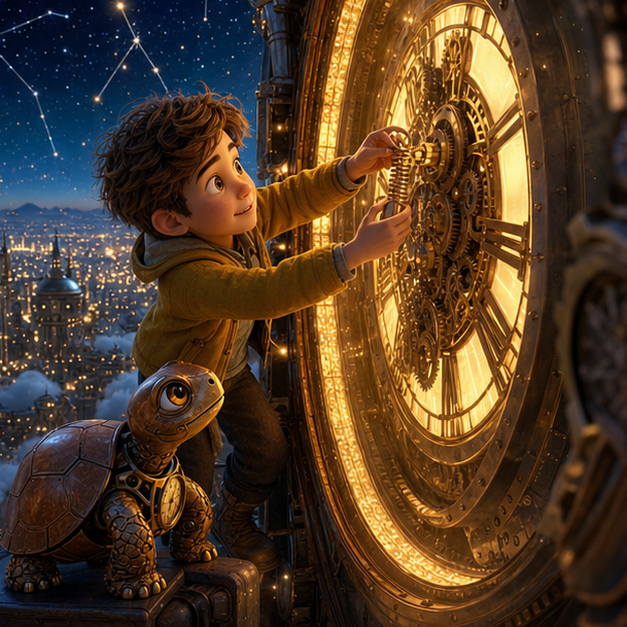
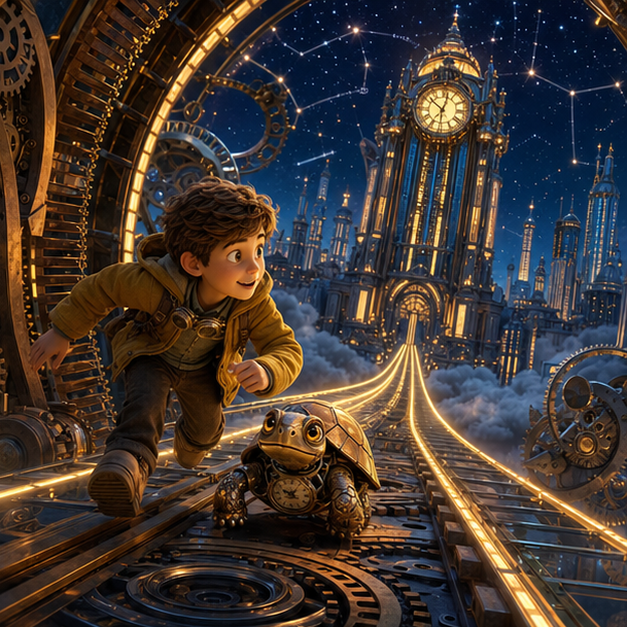
Marko lived in Future City, where lifts flew between rooftop gardens and polished rails glowed beneath everyone's feet. He loved the city because everything moved quickly. Doors opened before people knocked, breakfast printers finished pancakes in seconds, and school drones delivered books before the morning bell. Marko always wanted more speed. He rushed while tying his boots, while brushing his teeth, and even while speaking. His grandfather often laughed and said that a mind could trip faster than feet. In the back room of his grandfather's repair shop, among brass gears and humming batteries, Marko discovered a mechanical turtle with a copper shell and a tiny silver clock in its chest. The turtle woke with a soft click, stretched its small metal legs, and walked forward very slowly. Marko groaned. A machine in Future City should have raced like a rocket. But the turtle only blinked warm amber eyes and kept moving at the same calm pace. A small engraving on its shell read Tikka. That afternoon the Central Time Tower, which coordinated the city's lights, trains, and school bells, began to ring out of order. Everyone panicked. Marko leapt toward the repair tram at once, certain that speed alone would save the day. Tikka followed several steps behind, patient as sunrise.
Chapter 2: Gears, Echoes, and One Missing Spring
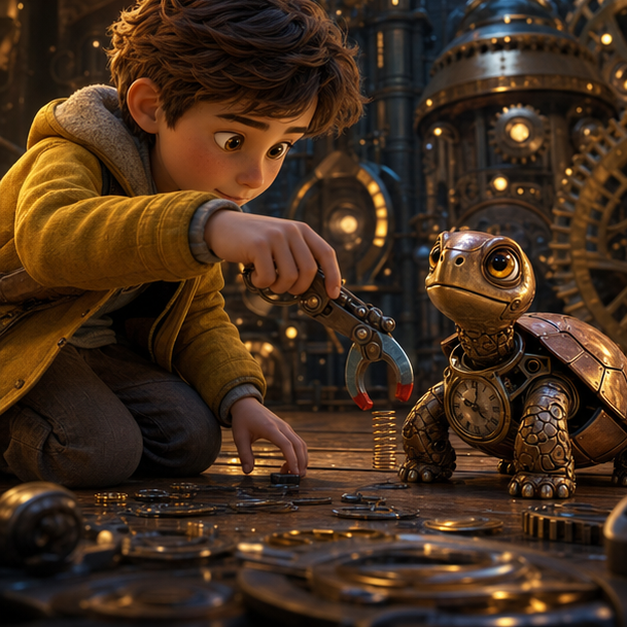
At the Central Time Tower, Marko rushed past technicians and climbed into the mechanism chamber before anyone could stop him. Hundreds of gears glittered around him like golden moons. He pulled one lever, then another, trying to force the tower back into rhythm. Instead, the bells clanged louder, the minute hands spun wildly, and a shower of harmless but embarrassing spark confetti burst across the room. The technicians shouted for everyone to step back. Marko's face burned. Tikka finally arrived, stepping through the chaos without hurry. The little turtle tapped the floor twice with one metal foot, then moved toward a narrow service tunnel beneath the main clock drum. Marko wanted to argue, but he followed. Inside the tunnel the noise softened. Tikka paused at each junction, listening to the clicks in the walls as though the whole tower were speaking. Marko had never listened to a machine before; he only tried to outrun it. Deep inside they found rows of tiny springs, levers, and balancing pins. Most were in place. One space, however, was empty. A single guiding spring had fallen into a crack below the floor grate. Marko immediately reached for it and scraped his fingers. Tikka waited. Then the turtle showed him another way: a thin magnet arm hidden in a panel. Slowly, carefully, Marko slid the arm into the crack and lifted the spring without damaging it.
Chapter 3: The Slow Step That Saved the City
Marko carried the spring with both hands as if it were a tiny star. Every instinct told him to run, but Tikka moved beside him with the same measured steps as before. For once, Marko matched that pace. When they returned to the mechanism chamber, the technicians opened a path. Marko climbed onto the service platform, breathed in deeply, and asked for the correct tool instead of grabbing the first one he saw. He fitted the spring into its slot, tightened the balance latch, and waited while the gears settled. One click followed another. The tower hands slowed. The bells rang once, clearly and correctly, and all across Future City the lights blinked back into harmony. Trams resumed their routes. School clocks matched the squares again. Marko's grandfather arrived just in time to see Tikka blink proudly from the floor. That evening, as sunset painted the glass towers orange, Marko sat beside the little turtle on the workshop steps. He realized patience was not the opposite of progress. Patience was what allowed good work to finish well. Speed had helped him reach the tower, but calm attention had saved it. From then on, whenever Marko felt himself racing too far ahead, he listened for Tikka's tiny steady footsteps and remembered that sometimes the surest way forward begins by slowing down enough to notice what everyone else has missed.