Sleep, Screens, and School: A Gentle Evening Routine for Young Teens
Evenings Need a Landing Strip
Young teens often arrive at bedtime with a busy brain: school, messages, homework, games, worries, and tomorrow’s schedule all competing for attention. A gentle evening routine works like a landing strip. It does not force sleep instantly; it gives the body repeated signals that the day is closing.
The most useful routines are predictable and humane. They leave room for real life while protecting the basics: food, preparation, connection, lower light, and screens away before sleep.
Move Screens Out of the Center
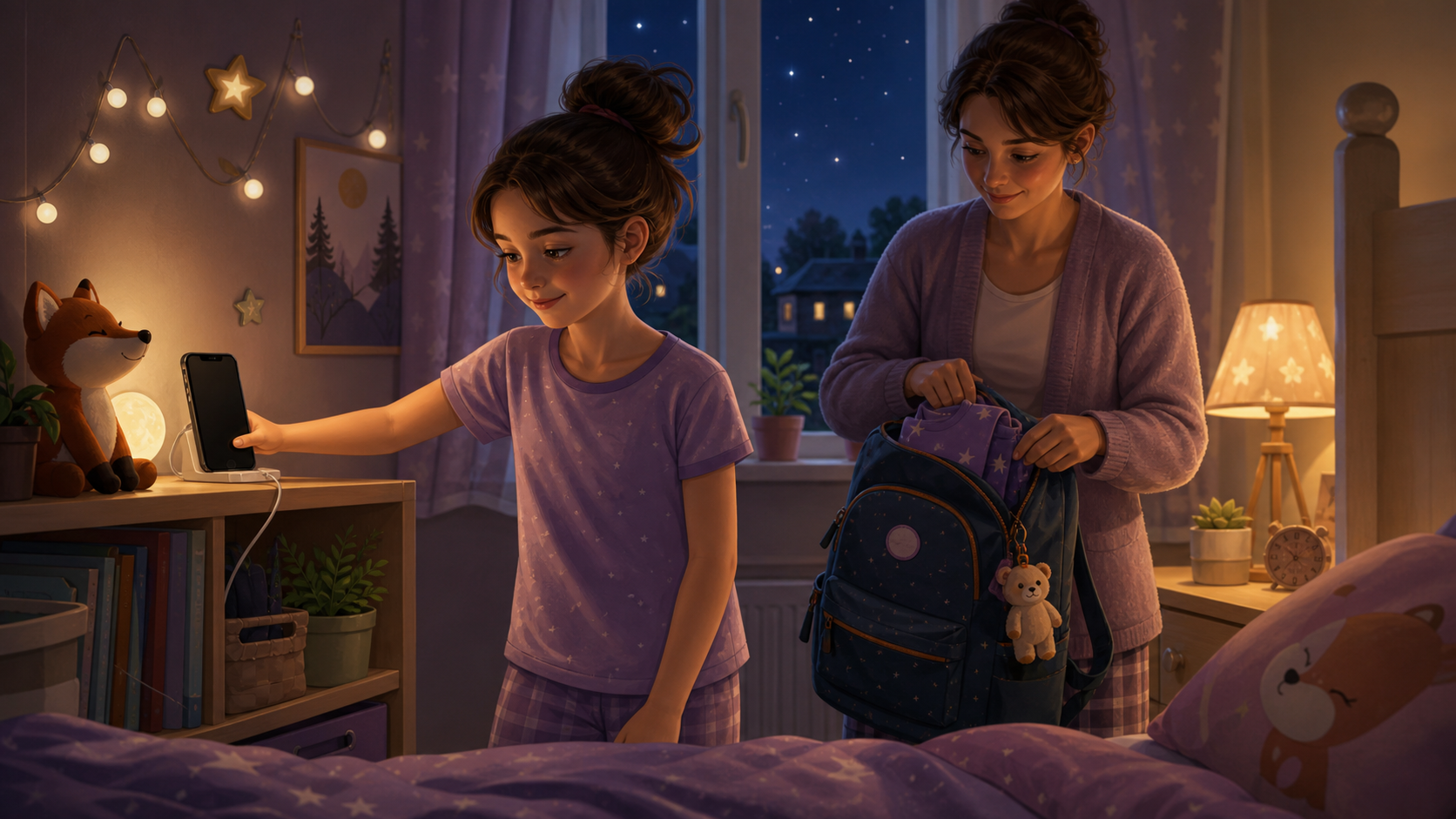
Screens are powerful because they combine light, novelty, social pressure, and unfinished stories. Instead of turning every night into a battle, make the expectation concrete: devices charge outside the bed, notifications pause, and the last half hour belongs to quieter activities.
If that feels impossible at first, start with ten minutes and build. Progress matters more than a perfect first week.
Prepare Tomorrow Before the Brain Gets Tired
School mornings are easier when a few decisions move to the evening. Pack the bag, choose clothes, check homework, fill the water bottle, and place shoes where they can be found. These tasks sound small, but they reduce morning conflict.
For anxious children, preparation also lowers mental noise. The message is: tomorrow is handled enough for now.
Keep Connection Short and Real
A young teen may not want a long bedtime talk, but many still need a moment of connection. Try a small ritual: one good thing, one hard thing, one plan for tomorrow. Keep it brief and do not turn it into problem-solving unless the child asks.
Calm connection helps the nervous system settle. It also keeps the parent-child door open during a stage when children are becoming more private.
Protect Sleep Without Making It a Moral Test
Some nights will go badly. Homework runs late, emotions spike, or a message arrives at the wrong time. Treat the routine as a resettable rhythm, not a moral test. The next evening is another chance.
When families protect sleep gently, they are not only preventing tired mornings. They are teaching self-care that young teens can carry into independence.