📖 The Clockwork Garden of Future City
Chapter 1: The Sunflower That Would Not Turn
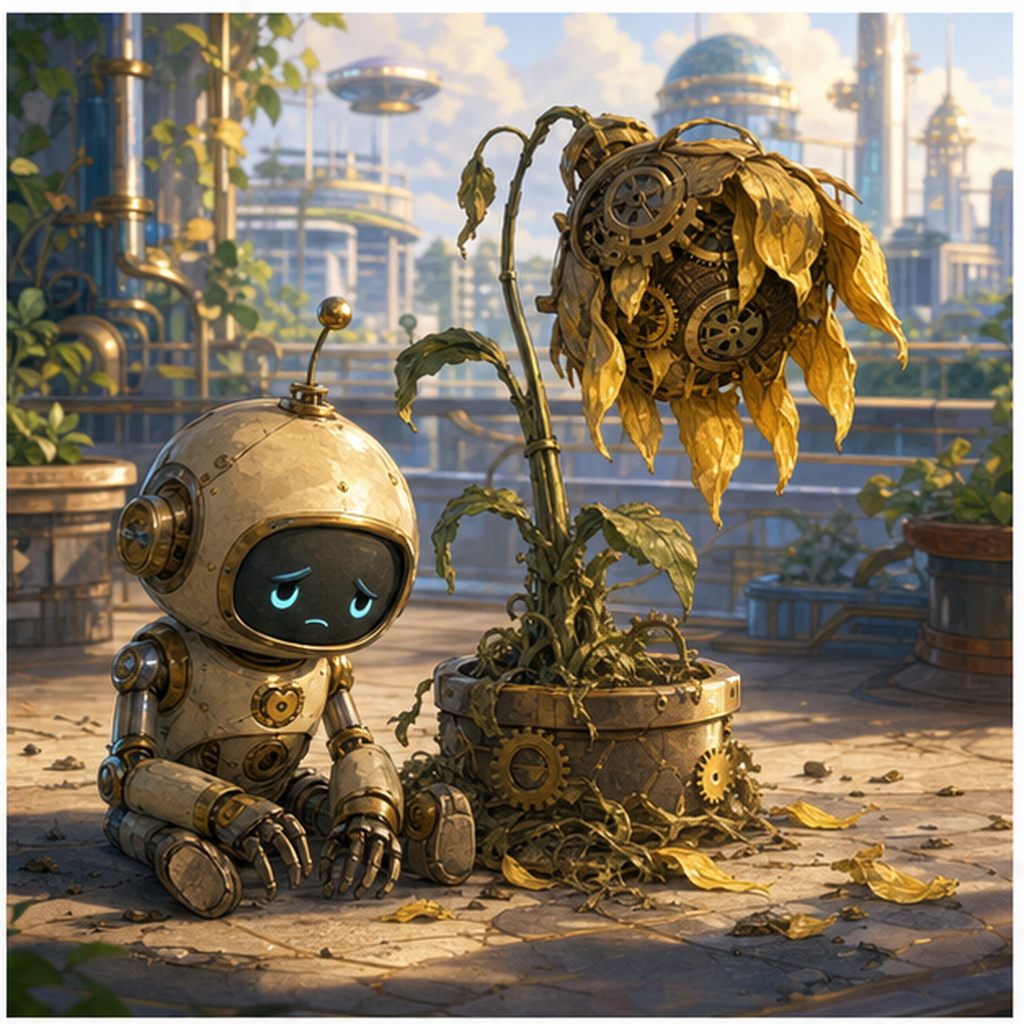
Future City had trains that whispered, windows that cleaned themselves, and lamps that knew when evening felt lonely. But Foxy's favorite place was the rooftop clockwork garden, where real flowers grew beside gentle brass gears. The gears did not boss the flowers. They opened shade screens, carried dew, and turned mirrors toward the sun. On Foxy's visit, the largest mechanical sunflower hung its head. Its golden petals clicked but would not turn. A small garden robot stood beside it with drooping antennae, holding a watering can shaped like a moon. The robot had tried polishing, tapping, and running three diagnostic songs, but nothing helped. Foxy almost suggested a bigger tool. Then he saw that the living vine around the sunflower was thirsty, and the light-crystals in the soil were cloudy. Future City could move quickly, yet gardens still kept plant time. Foxy knelt beside the robot and said they would help the sunflower without hurrying it into pretending to be well. Foxy also noticed the small details children often notice first: the way dust glittered when the light moved, the way a worried friend tried to be brave by standing a little straighter, and the way a good idea sometimes arrived only after everyone stopped talking at once. He named those details softly, because naming them made the moment feel less tangled. The friend beside him listened, then added one detail Foxy had missed. That made Foxy smile. A story becomes easier to enter when more than one heart is allowed to describe it. They made a careful plan with room for mistakes. Foxy would try the part that needed steady paws, his friend would watch for changes, and both of them would pause whenever the place seemed to ask for quiet. The first attempt worked only halfway. The second attempt made a funny mess. On the third attempt, they understood what the first two had been teaching them. Foxy felt the old wish to hurry, but now it sounded smaller. The work in front of him mattered more than being finished. Afterward, Foxy did not remember the adventure as a single grand triumph. He remembered the small choices: listening before acting, sharing before keeping, breathing before rushing, and thanking the friend who saw the missing piece. Those choices stayed with him like smooth pebbles in his satchel. Whenever he met another problem, he could take one out and remember how this day had changed because he chose care over speed. Before leaving, Foxy looked once more at the place where the trouble had begun. It no longer seemed like a warning sign. It seemed like a little doorway into understanding. He promised himself that he would tell the story carefully, including the unsure parts, because children who hear only brave endings may forget that brave beginnings often feel wobbly. The friend beside him agreed. They walked home slowly, letting the lesson settle like warm light in a window.
Chapter 2: Gears, Water, and Waiting
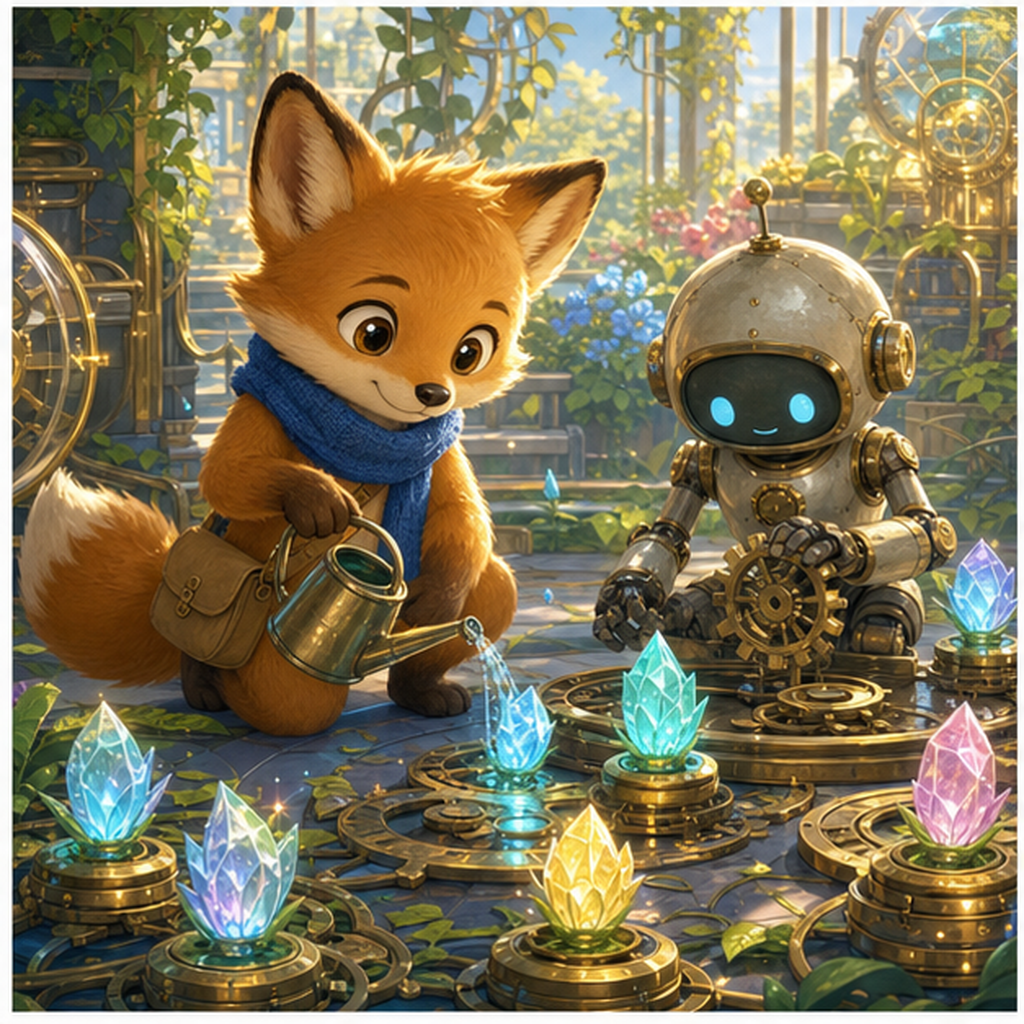
They began with water. Not a splash, not a flood, but a careful ring around the roots where the soil had cracked. The robot measured every drop and beeped anxiously when the sunflower did not lift at once. Foxy understood. Waiting after doing the right thing can feel like watching a closed door. He cleaned one light-crystal with the corner of his scarf, and the robot cleaned another with a soft brush. Together they adjusted the smallest gear, the one that opened the morning mirror. It had jammed because a tiny seed shell had slipped beneath it. Foxy could have pulled hard, but the robot showed him how to turn the gear backward first, then forward. The shell came free. Still the sunflower did not rise. So Foxy and the robot sat among the quiet machines and listened to the garden breathe. Slowly, the crystals brightened. Slowly, water moved through the vine. Slowly, one petal made the smallest golden click. Patience, Foxy realized, was not slower than care. It was care allowed to finish its work. Foxy also noticed the small details children often notice first: the way dust glittered when the light moved, the way a worried friend tried to be brave by standing a little straighter, and the way a good idea sometimes arrived only after everyone stopped talking at once. He named those details softly, because naming them made the moment feel less tangled. The friend beside him listened, then added one detail Foxy had missed. That made Foxy smile. A story becomes easier to enter when more than one heart is allowed to describe it. They made a careful plan with room for mistakes. Foxy would try the part that needed steady paws, his friend would watch for changes, and both of them would pause whenever the place seemed to ask for quiet. The first attempt worked only halfway. The second attempt made a funny mess. On the third attempt, they understood what the first two had been teaching them. Foxy felt the old wish to hurry, but now it sounded smaller. The work in front of him mattered more than being finished. Afterward, Foxy did not remember the adventure as a single grand triumph. He remembered the small choices: listening before acting, sharing before keeping, breathing before rushing, and thanking the friend who saw the missing piece. Those choices stayed with him like smooth pebbles in his satchel. Whenever he met another problem, he could take one out and remember how this day had changed because he chose care over speed. Before leaving, Foxy looked once more at the place where the trouble had begun. It no longer seemed like a warning sign. It seemed like a little doorway into understanding. He promised himself that he would tell the story carefully, including the unsure parts, because children who hear only brave endings may forget that brave beginnings often feel wobbly. The friend beside him agreed. They walked home slowly, letting the lesson settle like warm light in a window.
Chapter 3: Tomorrow Blooms Slowly
The sunflower turned just as sunset reached the glass towers. First one petal lifted, then another, until the whole clockwork face followed the last warm beam of day. The garden robot spun in a delighted circle and nearly watered Foxy's tail. Across the rooftop, other flowers answered: silver bells chimed, blue vines opened, and brass gears clicked into a softer rhythm. Future City below began to glow, not with hurried brightness, but with the steady light of many small systems working well. Foxy helped the robot write a new garden rule on a blank maintenance card: check roots before gears, water before worry, wait before forcing. They tucked the card into the robot's chest pocket. The sunflower dropped three seeds, and Foxy planted one in a quiet corner for tomorrow. It did not sprout while he watched, and this time he smiled. Some futures arrive through buttons and bridges. The best ones also need soil, attention, and enough patience to let a hidden beginning become a bloom. Foxy also noticed the small details children often notice first: the way dust glittered when the light moved, the way a worried friend tried to be brave by standing a little straighter, and the way a good idea sometimes arrived only after everyone stopped talking at once. He named those details softly, because naming them made the moment feel less tangled. The friend beside him listened, then added one detail Foxy had missed. That made Foxy smile. A story becomes easier to enter when more than one heart is allowed to describe it. They made a careful plan with room for mistakes. Foxy would try the part that needed steady paws, his friend would watch for changes, and both of them would pause whenever the place seemed to ask for quiet. The first attempt worked only halfway. The second attempt made a funny mess. On the third attempt, they understood what the first two had been teaching them. Foxy felt the old wish to hurry, but now it sounded smaller. The work in front of him mattered more than being finished. Afterward, Foxy did not remember the adventure as a single grand triumph. He remembered the small choices: listening before acting, sharing before keeping, breathing before rushing, and thanking the friend who saw the missing piece. Those choices stayed with him like smooth pebbles in his satchel. Whenever he met another problem, he could take one out and remember how this day had changed because he chose care over speed. Before leaving, Foxy looked once more at the place where the trouble had begun. It no longer seemed like a warning sign. It seemed like a little doorway into understanding. He promised himself that he would tell the story carefully, including the unsure parts, because children who hear only brave endings may forget that brave beginnings often feel wobbly. The friend beside him agreed. They walked home slowly, letting the lesson settle like warm light in a window.