📖 The Button Map of Rainy Town
Chapter 1: A Pocketful of Buttons
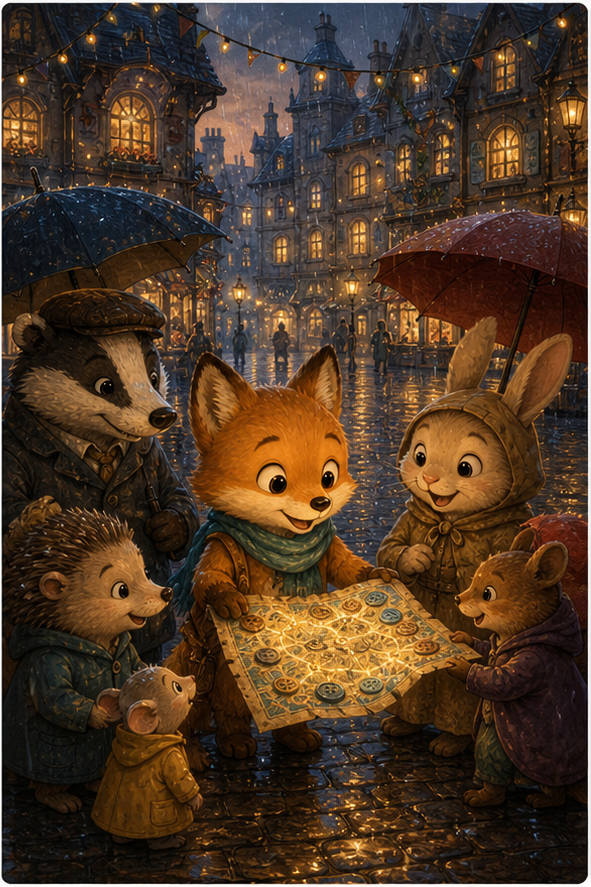
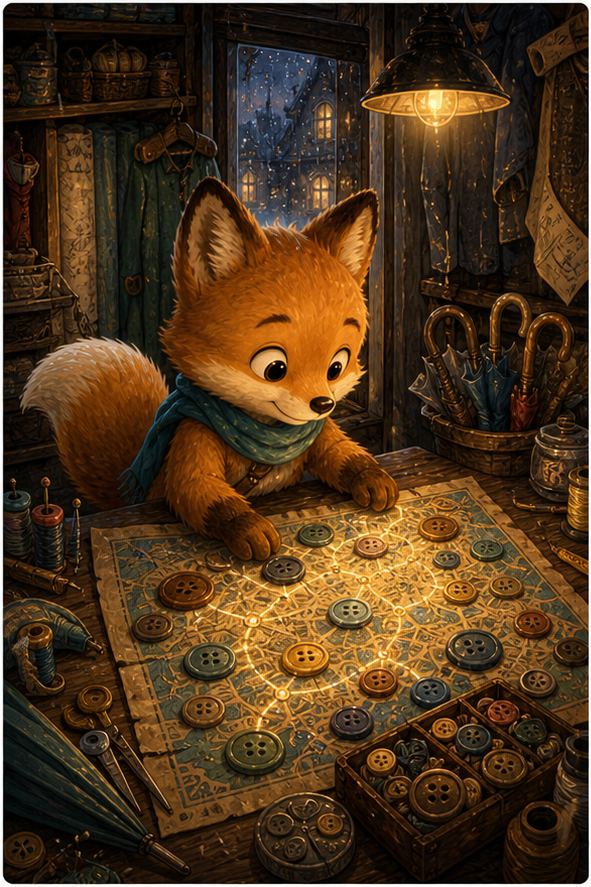
In Rainy Town, every child kept one emergency button in a pocket, because umbrellas there were forever losing something important. Foxy kept five, just in case. He liked buttons because they looked ordinary until you lined them up and saw a pattern. One drizzly afternoon, while waiting for the rain to soften outside Aunt Pella's tailor shop, Foxy sorted a jar of mismatched buttons by color on the front table. Blue, amber, pearl, red, green. Then he noticed that the oldest buttons had tiny carvings on them: a bridge, a teapot, a clock, a bakery oven, a paper boat. When he placed them in a row, the carvings formed a route across town. Aunt Pella leaned close and gasped. The founder of Rainy Town had hidden a helper's map in her first sewing jar. Legend said it led not to treasure, but to useful things forgotten during storms. Foxy's tail twitched with delight. A map made of buttons was exactly the sort of mystery curiosity was made for. Pella warned him not to chase riddles just for excitement. Curiosity, she said, should make you notice more, not crash into trouble faster. So Foxy borrowed a yellow umbrella, tucked the button map into a tin, and stepped into the rain to see where the first carved bridge might lead.
Chapter 2: Questions Under Umbrellas
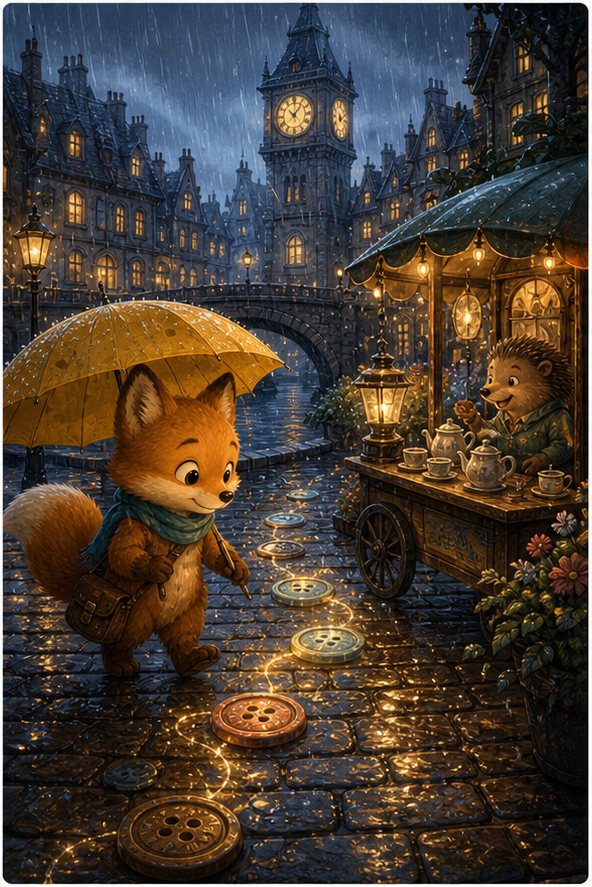
The first button led Foxy to Pebble Bridge, where he found not treasure, but a loose board that clacked whenever carts passed over it. Under the board lay a note wrapped in wax paper: Ask what has been missing. The second button brought him to a tea stall where the owner sighed about losing her brass rain gauge. The third pointed toward the clocktower, where a baker complained that the tower bell had stopped telling the market when to cover the loaves. Foxy began to understand the map. It did not send him to gather shiny prizes. It sent him to ask good questions and connect problems that seemed unrelated. He found the rain gauge rolled into a gutter grate near the bridge. He discovered that the clocktower rope had snapped because water from the broken gutter above had dripped on it for weeks. And behind the bakery oven he found a stack of paper boats folded by children who had nowhere dry to launch them. Curiosity kept opening one answer into another. By the time Foxy reached the last carved button, he no longer wanted simply to solve the puzzle first. He wanted to understand the whole rainy rhythm of the town. The final clue led to the square fountain, where a drain was blocked by soaked paper and bent umbrella spokes. When Foxy cleared it, water hurried away from the clocktower wall, the rope stayed dry, and the market square stopped flooding. The map's treasure was not hidden gold. It was the habit of looking closely enough to help.
Chapter 3: The Curious Square
That evening the rain eased to a silver mist, and Rainy Town gathered in the market square to hear Foxy's story. He placed the carved buttons on a cloth and explained how each clue had pointed not to treasure, but to a question. What is loose? What is missing? What keeps getting wet? What is no longer working, and why? Aunt Pella smiled from her shop doorway as neighbors began answering one another before Foxy even finished. The tea stall owner offered to hang a basket for lost instruments. The baker promised a covered boat shelf for the children. Two cart drivers volunteered to mend Pebble Bridge. And the clock keeper asked Foxy to help start a Curiosity Walk every rainy Saturday, so children could wander town, spot tiny problems early, and learn that paying attention is a gift you can practice. The founder's button map was sewn into a frame and hung in the tailor shop with one line stitched beneath it: Curious eyes keep towns kind. Foxy kept one plain green button from the set in his pocket. It no longer seemed ordinary at all. Whenever he touched it, he remembered that curiosity was not nosiness and not racing ahead for the thrill of being first. It was a way of loving a place enough to keep asking how it worked and who might need help next.